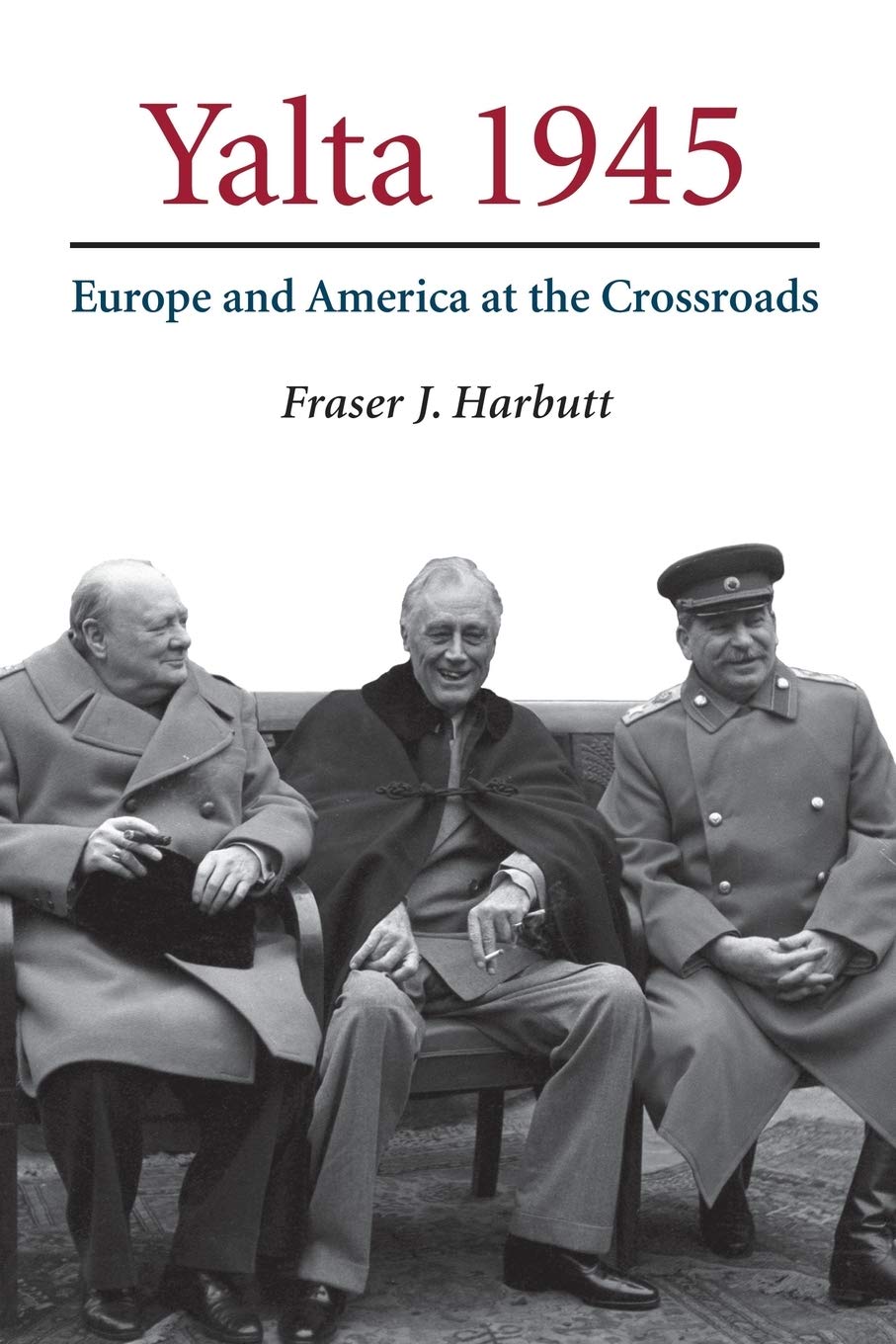



This revisionist study of Allied diplomacy from 1941 to 1946 challenges Americocentric views of the period and highlights Europe’s neglected role. Fraser J. Harbutt, drawing on international sources, shows that in planning for the future Churchill, Roosevelt, Stalin, and others self-consciously operated into 1945, not on “East/West” lines but within a “Europe/America” political framework characterized by the plausible prospect of Anglo-Russian collaboration and persisting American detachment. Harbutt then explains the destabilizing transformation around the time of the pivotal Yalta conference of February 1945, when a sudden series of provocative initiatives, manipulations, and miscues interacted with events to produce the breakdown of European solidarity and the Anglo-Soviet nexus, an evolving Anglo-American alignment, and new tensions that led finally to the Cold War. This fresh perspective, stressing structural, geopolitical, and traditional impulses and constraints, raises important new questions about the enduringly controversial transition from World War II to a cold war that no statesman wanted. “The scholarly profession is much in need of a new substantial scholarly work on the Yalta conference, its history and its legacy. Fraser Harbutt has produced a masterly new account of European-American relations during the Second World War. Its easily readable style is bound to appeal to scholars as well as the general public. This book is truly international history at its best written by one of the foremost and most knowledgeable experts in this area.” -Klaus Larres, London School of Economics “Professor Fraser Harbutt's latest book is a model of scholarship. It is elegantly written, a pleasure to read. It is thoroughly researched and employs archival materials hitherto overlooked or insufficiently mined. It abounds with shrewd insights and convincing portraits of British, Soviet, and American leaders as they wended their way through the final frenzy of World War Two and sought to shape a new global order. With very great care, Harbutt demonstrates how the Yalta conferees were constrained by geopolitical realities, the burdens and ‘lessons’ of the past, and the multitudinous tugs of domestic politics in the UK, USA, and USSR. Harbutt in Yalta 1945 makes a major contribution to that historiography centered on the Second World War and the early Cold War. His work amounts to a re-conceptualizaion, placing British statecraft and its European concerns at centerstage in the Yalta contest of wills, rather than a secondary drama to that featuring Stalin versus FDR. Particularly noteworthy is Harbutt's nuanced treatment of the Anglo-Soviet wartime relationship in 1944-45. This is an indispensable study for anyone trying to make sense of the mid-twentieth century's diplomatic dilemmas and violent turmoil. Harutt's is international history at its best--lucid, judicious, and refreshingly original. A rare achievement, most impressive.” -David Mayers, Boston University "Yalta 1945 is a worthy addition to the trend of internationalizing Cold War studies. More than a study of Roosevelt, Churchill and Stalin's last summit, Harbutt's treatment puts that pivotal moment in world history in its original wartime context. Reminding us that history is lived forward, he shows how the preconditions of Yalta, notably the Eurocentric power politics practiced by Churchill and Stalin, interacted with the universalism of Roosevelt's hopes for a postwar world order. The result was disorder and disagreements that eventually led to the breakdown of the wartime alliance and the onset of the Cold War. Harbutt's interpretation is revisionist in the best sense. He revises our Americocentric, East versus West, perspective on Yalta and enriches our understanding of its place in the origins of the Cold War.” - Robert Messer, University of Illinois at Chicago "This fascinating and provocative study exemplifies international history at its very best. Rather than simply reading the history of wartime Allied diplomacy backwards through the lens of the Cold War, Fraser Harbutt insightfully analyses the ideas and initiatives of the various actors as they moved forward from 1941. He astutely and forcefully challenges the dominant American historiography, and provides a more compelling and complex understanding of the actions and interactions of Roosevelt, Churchill, Stalin and their associates. He succeeds brilliantly in restoring Europe to an important place in the great geopolitical wartime drama, and convincingly reveals the crucial importance of the Anglo-Soviet relationship up to 1945. Yalta 1945 is assuredly required reading for all who seek to understand the competing endeavors and interests of the victorious powers in World War II. It will force reconsiderations from serious historians of all persuasions." -Wilson D. Miscamble, C.S.C., University of Notre Dame “Harbutt’s cogent, lucid study upends existing interpretations of the Yalta Confer