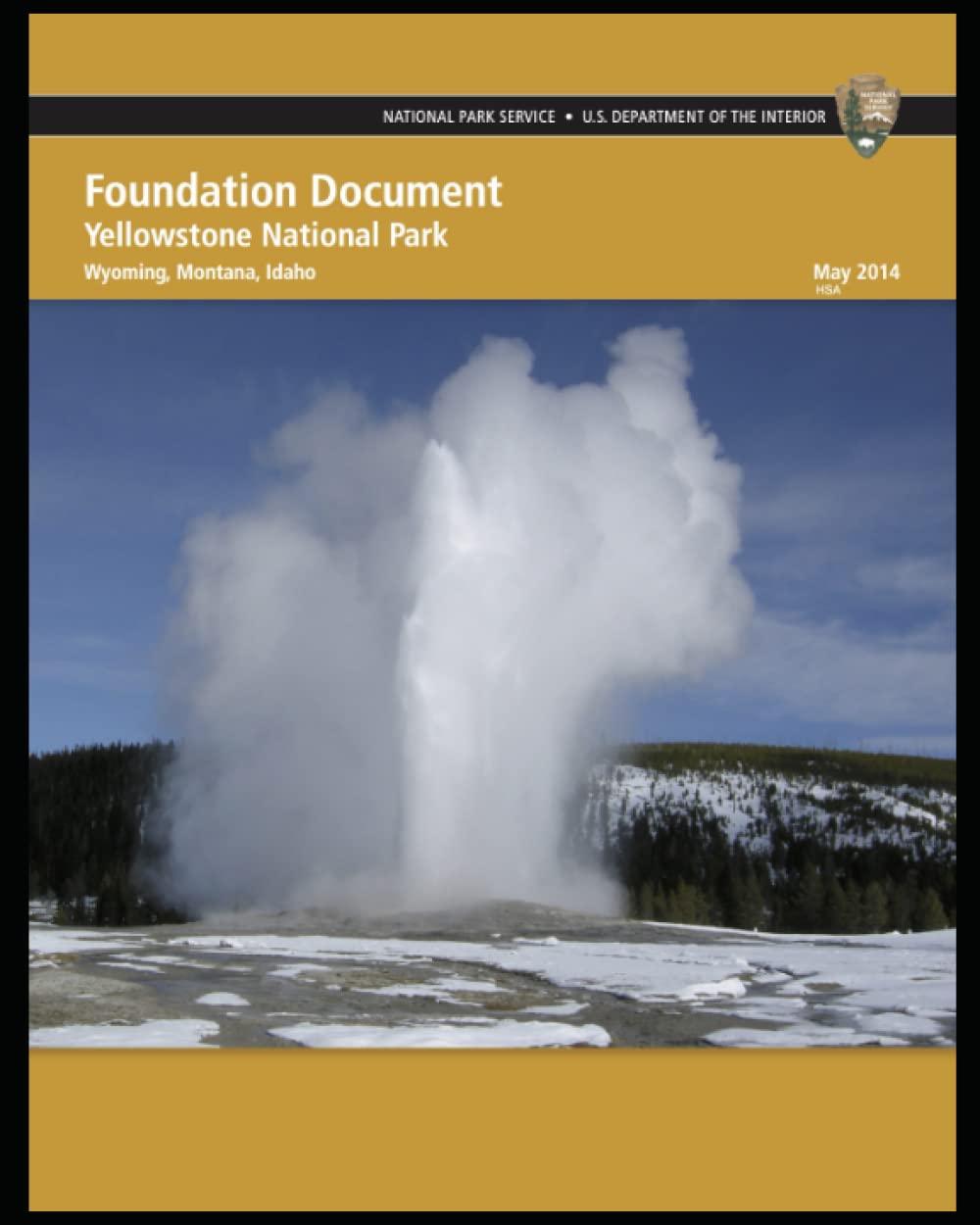
Yellowstone National Park Foundation Document: Yellowstone: The World's First National Park - March 1, 1872
$13.95
by National Park Service U.S. Department Of The Interior



* Paperback Version - 86 Pages - Printed in Color * Love Yellowstone? Yellowstone National Park - A True Wonder of Hydrothermal and Geologic Features, Along With A Large Selection of Wildlife, Is Like No Other Place On Earth! This book, the "Foundation Document", details the rich resources and diversity of features and describes how and why we must manage this rich resource for future generations to enjoy! Yellowstone became the world’s first national park on March 1, 1872, set aside in recognition of its unique hydrothermal features and for the benefit and enjoyment of the people . With this landmark decision, the United States Congress created a path for future parks within this country and around the world; Yellowstone still serves as a global resource conservation and tourism model for public land management. Yellowstone is perhaps most well-known for its hydrothermal features such as the iconic Old Faithful geyser . The park encompasses 2.25 million acres, or 3,472 square miles, of a landscape punctuated by steaming pools, bubbling mudpots, spewing geysers, and colorful volcanic soils. Filled with the smell of sulfur and described in 1856 by Jim Bridger as a “place where Hell bubbled up,” Yellowstone is still recognized as a place of wonder. The park contains more than 10,000 thermal features, including the world’s greatest concentration of geysers. A large underground volcanic system fuels these hydrothermal features, and has shaped the park’s landscape over centuries. Yellowstone is the heart of the Greater Yellowstone Ecosystem (GYE), a vast landscape of 28,000 square miles populated by a wide variety of wildlife and geologic wonders. Surrounded by six national forests, private and reservation lands, and over 2 million designated wilderness acres, the Greater Yellowstone Ecosystem is one of the last, largest, mostly intact temperate-zone ecosystems on earth. Ninety percent of the acres within park borders are managed as wilderness where human intrusion and intervention into natural processes are minimized. These lands support a wide variety of wildlife, including bison, grizzly and black bears, gray wolves, elk, bighorn sheep, coyotes, otters, cutthroat trout, and other species. In 1972, the United Nations Educational, Social, and Cultural Organization (UNESCO) named Yellowstone the first area in the United States to be designated as a Biosphere Reserve, and in 1978 the park was declared a world heritage site. This vast landscape contains the headwaters of several major rivers. The Firehole and Gibbon rivers unite to form the Madison, which, along with the Gallatin River, joins the Jefferson to create the Missouri River several miles north of the park. The Yellowstone River is a major tributary of the Missouri, which then flows via the Mississippi to the Gulf of Mexico . The Snake River arises near the park’s south boundary and joins the Columbia to flow into the Pacific. Yellowstone Lake is the largest lake at high altitude in North America and the Lower Yellowstone Falls is the highest of more than 40 named waterfalls in the park. Yellowstone has been important to people for thousands of years. The park preserves resources associated with over 11,000 years of human history, which provide insights into a variety of cultures and values, including those of American Indians, trappers, explorers, miners, U.S. Army personnel, National Park Service (NPS) and private sector concession staff, neighboring communities, and over 140 years of park visitors. This book is a must-have for those who Love Yellowstone and appreciate it's history, diversity and abundant resources. You'll love reading and referencing this book for years to come!