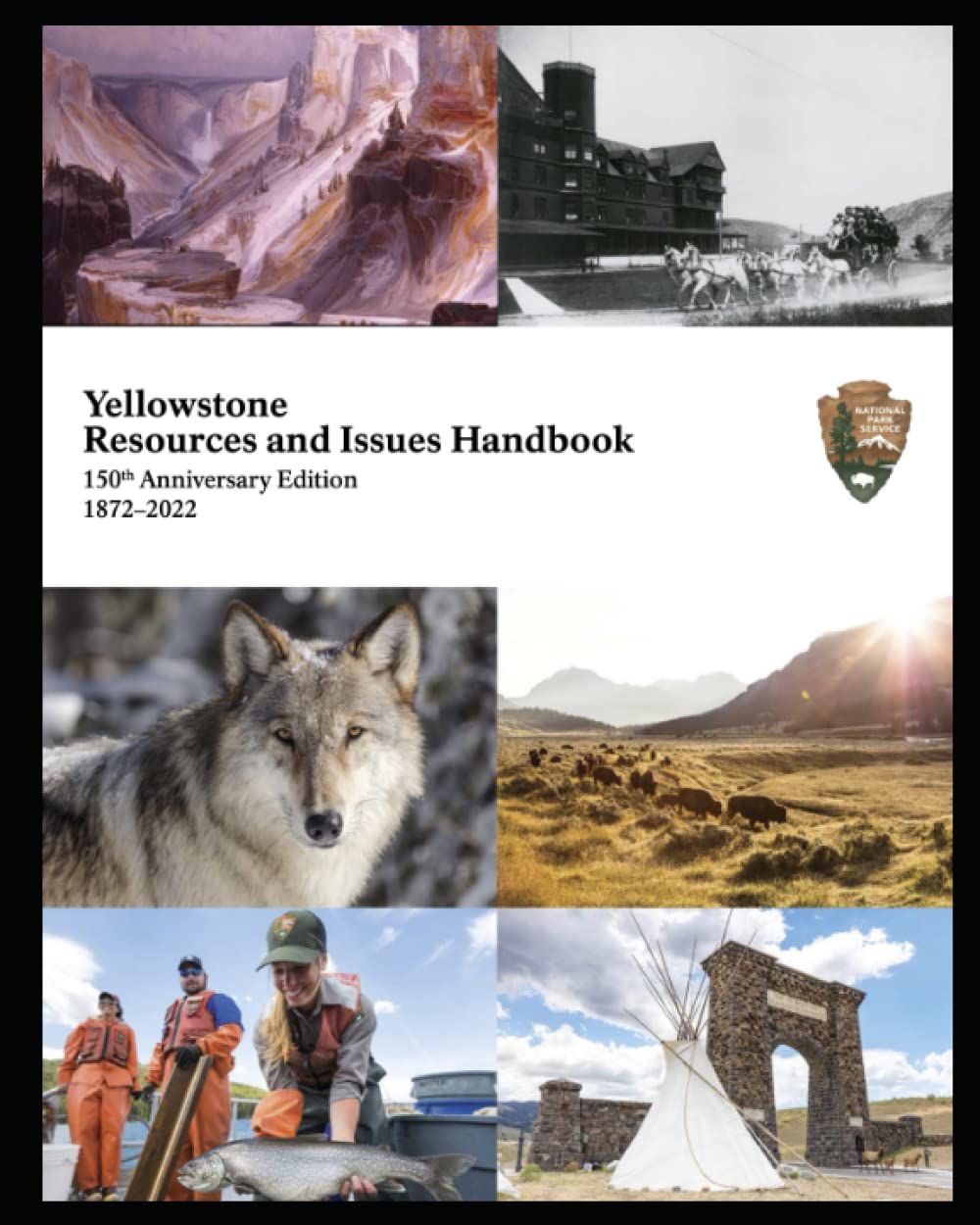
Yellowstone Resources and Issues Handbook 2022: 150th Anniversary Edition 1872–2022
$32.04
by U. S. National Park System



300+ Pages Printed in Color to represent this amazing natural resource seen in all it's glory! NOTE: This guide was printed just before the Yellowstone Floods in 2022 that drastically changed much of the Northern part of the Park. The Primary Content Sections: Welcome - History of the Park - Preserving Cultural Resources - Greater Yellowstone Ecosystem - Geology - Life in Extreme Heat - Vegetation - Fire - Wildlife Yellowstone National Park is as wondrous as it is complex. The park has rich human and ecological stories that continue to unfold. When Yellowstone was established as the world’s first national park in 1872, it sparked an idea that influenced the creation of the National Park Service and the more than 400 sites it protects today across the United States. Yellowstone National Park also forms the core of the Greater Yellowstone Ecosystem. At 34,375 square miles, it is one of the largest, nearly intact temperate-zone ecosystems on Earth. The park continues to influence preservation and science, and we are pleased to share its stories with you. 150 Years of Yellowstone: Signed into law by President Ulysses S. Grant, America’s first national park was set aside to preserve and protect the scenery, cultural heritage, wildlife, geologic and ecological systems and processes in their natural condition for the benefit and enjoyment of present and future generations. Yellowstone serves as the core of the Greater Yellowstone Ecosystem, one of the last and largest nearly intact natural ecosystems on the planet. Yellowstone has the most active, diverse, and intact collections of combined geothermal features with over 10,000 hydrothermal sites and half the world’s active geysers. The park is also rich in cultural and historical resources with 25 sites, landmarks, and districts on the National Register of Historic Places. Based on the park’s location at the convergence of the Great Plains, Great Basin, and Columbia Plateau, 27 Native American Tribes have historic and modern connections to the land and its resources. For over 10,000 years before Yellowstone became a national park, it was a place where Native Americans lived, hunted, fished, gathered plants, quarried obsidian, and used thermal waters for religious and medicinal purposes. Park managers have learned many lessons during Yellowstone’s 150 years. In the early 1900s, the government killed nearly all predators in the park, and the bison population was hunted to less than two dozen. Later that century, the fires of 1988 burned more than one-third of the park, and the introduction of nonnative lake trout decimated native Yellowstone cutthroat populations. Through modern resource management efforts involving bison, grizzly bears, native fish, gray wolves, wildland fire, and others, Yellowstone’s ecosystem is the healthiest it has been in over a century. Today, Yellowstone is facing new challenges. Employee housing, workforce development, historic preservation, effects of climate change, transboundary wildlife management, increasing visitation, and deteriorating infrastructure are issues impacting Yellowstone’s workforce, resources, visitors, and gateway communities. To tackle these challenges, Yellowstone has set five major strategic priorities, each supporting the overarching National Park Service mission and each critical to Yellowstone’s success.