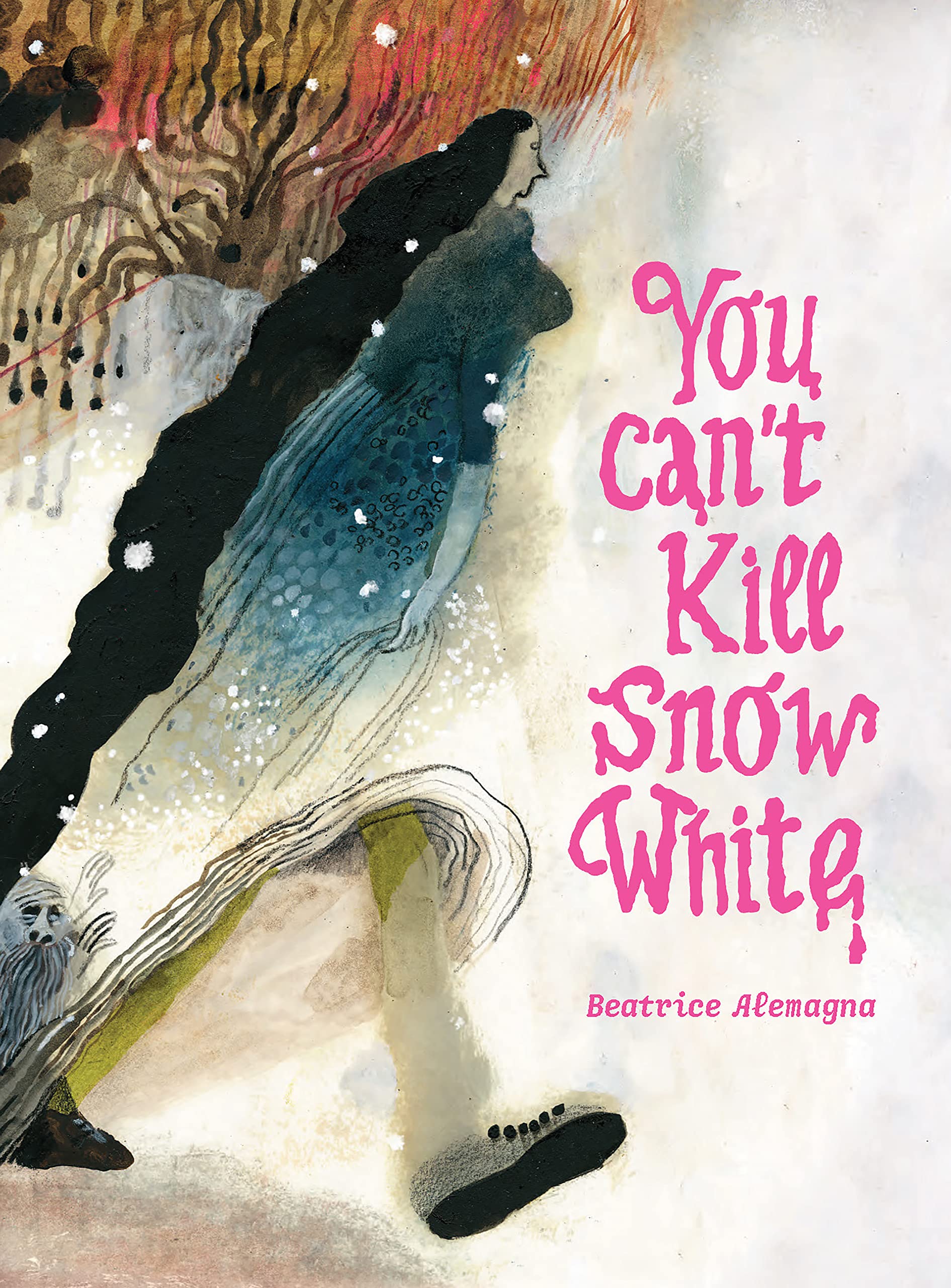



In this dark, genre-defying picture-book adaptation of Snow White, acclaimed artist Beatrice Alemagna tells the story from the point of view of the jealous stepmother queen, to complicate the question of goodness and set into high relief the shadow side, with its capacity for evil, of human life. Once upon a time, a child was born with skin as white as snow, lips as red as blood, and hair as black as ebony: the princess Snow White. She is possessed of beauty and innocence, but there in the shadows lurks a queen who will remarry her widower father, a queen who is as empty and envious, as narcissistic and fractured as is every life that gets stuck in the endless reflecting pool or mirror of the self. Void of love, it is hatred that animates her. But like all true fairy tales, this story doesn't ask us to judge and condemn the queen and her hatred, but rather to consider the kinds of behaviors and situations that invite evil, and where true innocence or goodness might lie. Following the first-person account of the queen, this picture book for older readers illuminates her blinding obsession and insatiable jealousy, right up to the point of her violent undoing. This large format picture book is made up of a repeating pattern of text and image: each double spread of text is followed by four striking full-spread paintings, which are as riveting as they are unsettling. A bold adaptation of the Grimm's original text, this version of Snow White brilliantly puts us all in touch with the messy, shadowed, fraught, and fragile inwardness we each possess. This is the second book to appear under Unruly, an imprint of picture books for older readers, and will include an author's note and a short note to readers about how it continues to build this experimental framework of visually complex, sophisticated picture books for teens and adults. Shortlisted for the Global Literature in Libraries Initiative's Translated Young Adult Book Prize Gr 5-8-Alemagna can make charming pictures, lovely illustrations, sweeping landscapes, and sweet-faced children-but not for this book. Here, she writes and paints from the perspective of the bitterest, most evil of old queens, and so the perspectives are skewed, deliberately ugly, frightening, and Gothic. Snow White's beauty is left to readers' imaginations. The dwarves are costumed as bent half-birds, half-root vegetables. The result is a return to the story's grim origins, so that when the huntsman spares Snow White's life and brings back the liver and lungs of a wild beast instead, viewers are treated to panel after panel of the queen devouring the bloody mess. This is a picture book for older, ghoulish listeners, but they will be leaning in for every delightful word. The translation is bold, vividly hewing to the harsh actions outlined in both story and illustrations, such as the iron shoes and dance of death that greet the queen when Snow White marries her prince. The paintings, almost primitive, are worked out in a feverish palette, consistent with the narrator's warped view of events. VERDICT If there is but one fairy-tale purchase in the budget this year, this one deserves attention. Alemagna is inventive and enthralling.-Kimberly Olson Fakihα(c) Copyright 2011. Library Journals LLC, a wholly owned subsidiary of Media Source, Inc. No redistribution permitted. Shortlisted for the Global Literature in Libraries Initiative's Translated Young Adult Book Prize! "In You Can't Kill Snow White , Beatrice Alemagna’s strange, organic paintings recreate the brutal envy that underpins the original Brothers Grimm story. Minimizing the prose—which is lucidly translated from the French by Karin Snelson and Emilie Robert Wong—and maximizing the unsettling emotionality of each image, Alemagna explores the heart and mind of the 'evil' queen, from whose point of view this version of the tale is told... Readers looking for the why that drives this envy will be disappointed. But the why doesn’t matter. You Can’t Kill Snow White asks us to bear witness to the experience and consequences of jealousy—and to acknowledge our complicity. What horrors have we inflicted on others? Whose hearts have we willingly devoured? And what do we stand to lose when we succumb to envy’s lure? In this, the story is clear: Envy burns us alive, leaving only ashes behind." ― Newbery Medalist Kelly Barnhill (The Girl Who Drank the Moon) , New York Times "Similar to how Klassen’s texture makes my brain play and fill in the world, Beatrice’s loose paintings in this one are an even more amplified example—toes on the line at times between representational and abstract art. The familiar fairy tale she’s retelling becomes a truly strange and foreign affair with this treatment… Like the remembrance of a dream, or a Polaroid from childhood… Beatrice’s book was a constant reminder for me to lean into the smudge and away from crisp renderings." ― Shawn Harris "A retelling of 'Snow White' from the queen’s perspective, this