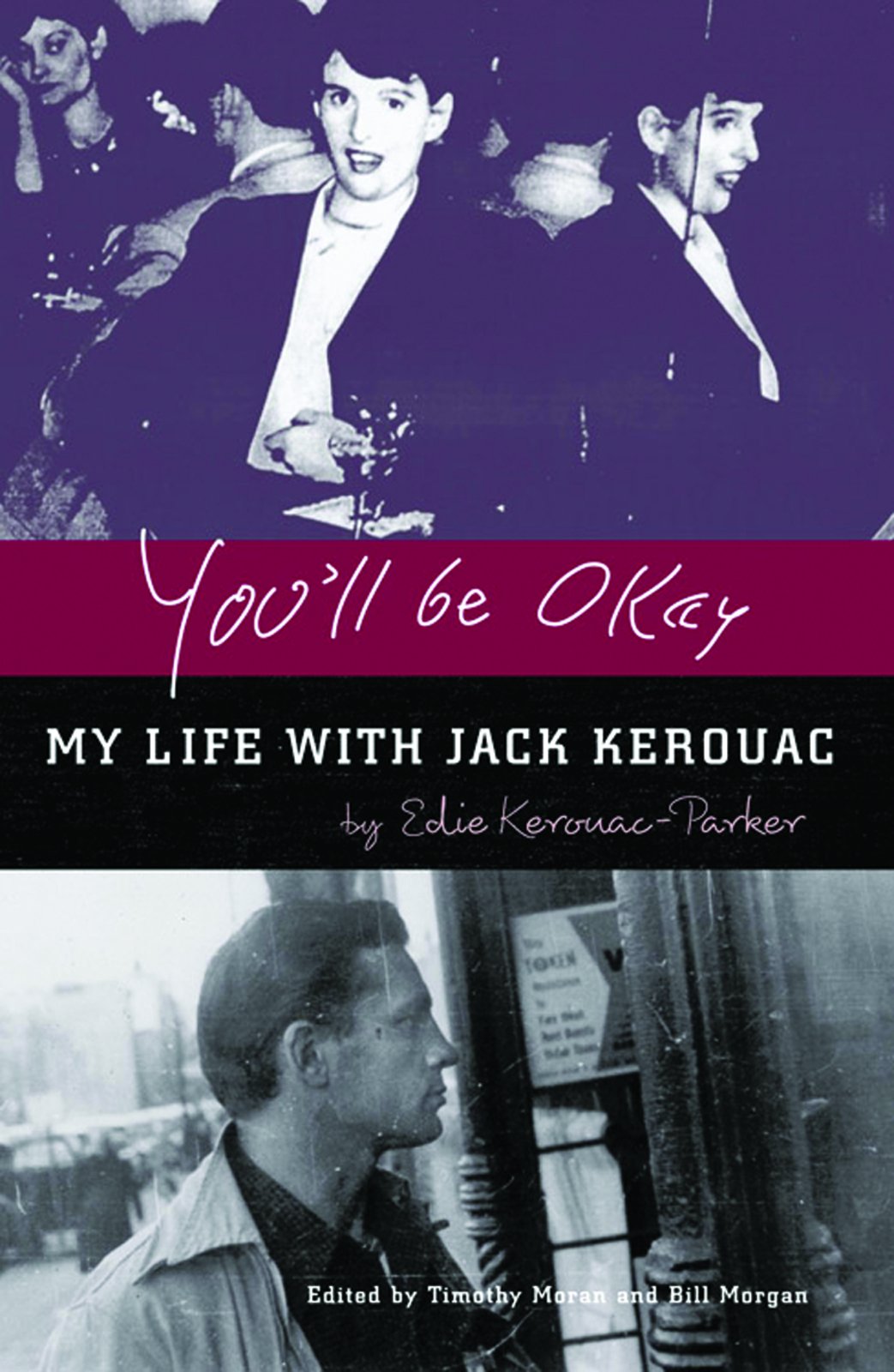



"You have a unique viewpoint from which to write about Jack as no one else has or could write. I feel very deeply that this book must be written. And no one else, I repeat, can write it."--William S. Burroughs Edie Parker was eighteen years old when she met Jack Kerouac at Columbia University in 1940. A young socialite from Grosse Pointe, Michigan, she had come to New York to study art, and quickly found herself swept up in the excitement and new freedoms that the big city offered a sheltered young woman of that time. Jack Kerouac was also eighteen, attending Columbia on a football scholarship, impressing his friends with his intelligence and knowledge of literature. Introduced by a mutual friend, Jack and Edie fell in love and quickly moved in together, sharing an apartment with Joan Adams (who would later marry William S. Burroughs). This is the story of their life together in New York, where they began lifetime friendships with Allen Ginsberg, William S. Burroughs, and others. Edie's memoir provides the only female voice from that nascent period, when the leading members of the Beat Generation were first meeting and becoming friends. In the end, Jack and Edie went their separate ways, keeping in touch only on rare occasions through letters and late-night phone calls. In his last letter to Edie, written a month before his death, Kerouac ended it with the encouraging phrase: "You'll be okay." It was from that note that the title of this book was taken. *Starred Review* Kerouac's first wife, Edie Parker, played a pivotal role in his literary evolution, but her side of the story hasn't been fully known until now. A pampered and venturesome 17-year-old when she first spies handsome Jack pushing Cole Porter in a wheelchair near Columbia University, she falls madly in love. Against her family's wishes, she valiantly marries Kerouac in 1944 in order to spring him from a Bronx jail after he was arrested as an accomplice to their friend Lucien Carr's murder of the stalker David Kammerer. Fascinating in her own right, and writing with compelling lucidity and soulful sweetness, Parker vividly recalls her posh childhood, life in Queens with Kerouac and his parents, and her pride in working as a longshoreman. As she shares intimate details of her hectic wartime life, she provides a rare female perspective on the notoriously misogynistic Beat enclave. The story of how Parker's radiant memoir finally reached print 15 years after her death is yet more poignant testimony to life's mysterious ways. Seaman, Donna "Sad and funny, full of pathos and the lost dreams of youth, 'You'll Be Okay' will find it's way to the short list of exceptional books by women of the Beat Generation that includes Carolyn Cassady's 'Off the Road' and Joyce Johnson's 'Minor Characters.' This year, on the 50th anniversary of the publication of 'On the Road, ' readers may well want to turn to Edie's long-overdue memoir for one woman's soulful view of Kerouac, Carr, Ginsberg and Burroughs, whom she knew intimately and describes in her own inimitable style." - Jonah Raskin, The San Francisco Chronicle "Kerouac's first wife, Edie Parker, played a pivotal role in his literary evolution, but her side of the story hasn't been fully known until now. . . . Fascinating in her own right, and writing with compelling lucidity and soulful sweetness, Parker vividly recalls her posh childhood, life in Queens with Kerouac and his parents . . . she provides a rare female perspective on the notoriously misogynistic Beat enclave. "-- Booklist , Starred Review "A quirky and poignant addition to the Beat lore and 'memory' by a woman who lived it."--Anne Waldman, The Jack Kerouac School of Disembodied Poetics "This is a wonderful memoir of a girl in love. When she wrote it, Edie Frankie Parker was no longer a girl, and her love, Jack Kerouac, was long gone. But Edie, or Frankie as her intimates called her, remembered everything about her brief marriage to Jack, as if a bubble of resilient sunshine had encapsulated those few years during World War 2, and kept intact every detail. She remembers what they ate, what they wore, what movies they saw. Her Jack Kerouac was young, handsome, a lover of fun, and a would-be writer. He stayed so in her memory and though she alludes occasionally to the alcoholic monster that emerged in later years, that creature doesn't live here. In these pages we meet the young genius of just before On the Road, adored by all and loved by her most of all. The flavor of the war years with all their privations and mad hopes wafts from these pages freshly, like an Atlantic breeze, and makes one wonder, finally, what might have happened if Jack had settled down with Frankie, instead of following the turbulent destiny that changed America."--Andrei Codrescu, author of Wakefield "Edie Kerouac-Parker's long-delayed post-humous memoir clears up much of the myth-making and 'made-up facts' about this tumultuous, but seminal relationship between herself and e