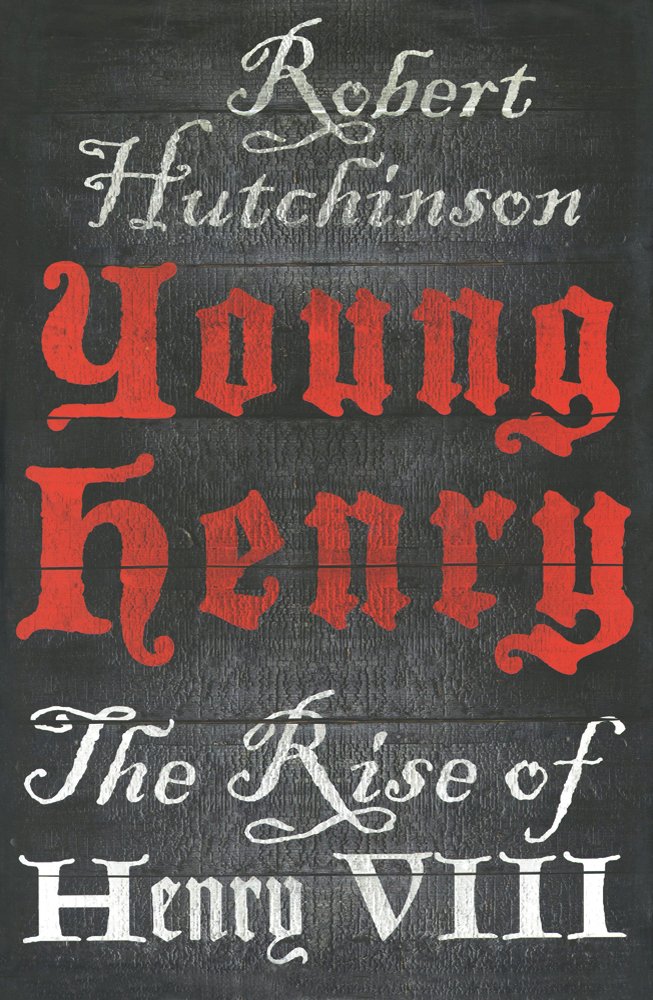



Set during the same years of Henry VIII's life as The Tudors, this book charts his rise as a magnificent and ruthless monarch Immortalized as a domineering king, notorious philanderer, and the unlikely benefactor of a new church, Henry VIII became a legend during his own reign. Who, though, was the young royal who would grow up to become England's most infamous ruler? Robert Hutchinson's Young Henry examines Henry Tudor's childhood beginnings and subsequent rise to power in the most intimate retelling of his early life to date. While Henry's elder brother Arthur was scrupulously groomed for the crown by their autocratic father, the ten-year-old "spare heir" enjoyed a more carefree childhood, given prestige and power without the looming pressures of the throne. Everything changed for the young prince, though, when his brother died. Henry was nine weeks shy of his eighteenth birthday when he inherited both his brother's widow and the crown. As King, Henry preferred magnificence and merriment to his royal responsibilities, sweeping away the musty cobwebs of his father's court with feasting, dancing, and sport. Frustrated, too, by the seeming inability of his wife, Katherine of Aragon, to produce an heir, Henry turned his attention to a prospective second queen whose name would endure as long as his: Anne Boleyn. With the king still lacking a successor by the age of 35, however, the time for youthful frolic had come to an end. Divorcing his wife and the Catholic Church, executing his lover and his violent will, Henry charged forward on a scandalous path of terrifying self-indulgence from which there was no turning back. Young Henry is an illuminating portrait of this tyrannical yet groundbreaking king―before he transformed his country, and the face of the monarchy, irrevocably. Hutchinson complements his biography of the old king (The Last Days of Henry VIII, 2005) with this portrait of the young monarch up to the late 1520s, when Henry had turned against his chancellor, Cardinal Thomas Wolsey, for failing to secure a divorce from Katherine of Aragon. She, of course, had been previously married to Henry’s elder brother, Arthur, whose death cleared the way for Henry’s ascension to the throne. Katherine’s role as her father’s diplomatic pawn is prominent in Hutchinson’s account, which, after a run through Henry’s infancy and adolescence that is replete with descriptions of his accoutrements and investitures, settles into twentysomething Henry’s effort to live up to a late medieval king’s job description as warrior in chief. He did so with his capture of a few French towns in the 1510s. Henry’s return to his realm, devotion to courtly revels, and vexation over Katherine’s inability to beget a male heir occupy the balance of Hutchinson’s narrative. Pulling quotations from the archives that convey Henry’s pious yet imperious personality, Hutchinson ably meets history fans’ unflagging fascination with Henry VIII. --Gilbert Taylor “Hutchinson complements his biography of the old king ( The Last Days of Henry VIII , 2005) with this portrait of the young monarch up to the late 1520s, when Henry had turned against his chancellor, Cardinal Thomas Wolsey, for failing to secure a divorce from Katherine of Aragon ... Pulling quotations from the archives that convey Henry's pious yet imperious personality, Hutchinson ably meets history fans' unflagging fascination with Henry VIII.” ― Booklist “Anyone who sees history as boring should be given Robert Hutchinson's book post haste. Without sacrificing facts and research, he has the ability to construct an absolutely compelling narrative and, though I never thought I'd say this of a book on Thomas Cromwell, one that is impossible to put down. He is one of the few authors who keep you up till 3 a.m.” ― The Bookseller “Although Hutchinson, a British journalist and former publishing director, points out that Henry VIII was not the "great libertine with an insatiable debauched appetite that some fiction writers would have us believe," his fifth book on Tudor England (Elizabeth's Spy Master) should still please those fans of the salacious television series The Tudors who would like to set Henry's early reign in its proper factual context.” ― Publishers Weekly “Robert Hutchison's Young Henry , set during the same period of Henry VIII's life as The Tudors, proves a factual complement to the television drama that has captured modern imaginations ... anyone with a passing interest in Tudor history will catch up quickly and delight in a detailed profile of one of England's most famous--and infamous--monarchs.” ― Shelf Awareness “a gruesome story, of pride, greed and flaunting arrogance, blood and cruelty, cunning and stupidity... [Robert Hutchinson] has created a delightful and instructive book.” ― Paul Johnson, Literary Review on House of Treason “the narrative is compelling and horrible... It is a riveting story, splendidly told.” ― Allan Massie, The Daily Telegraph on House