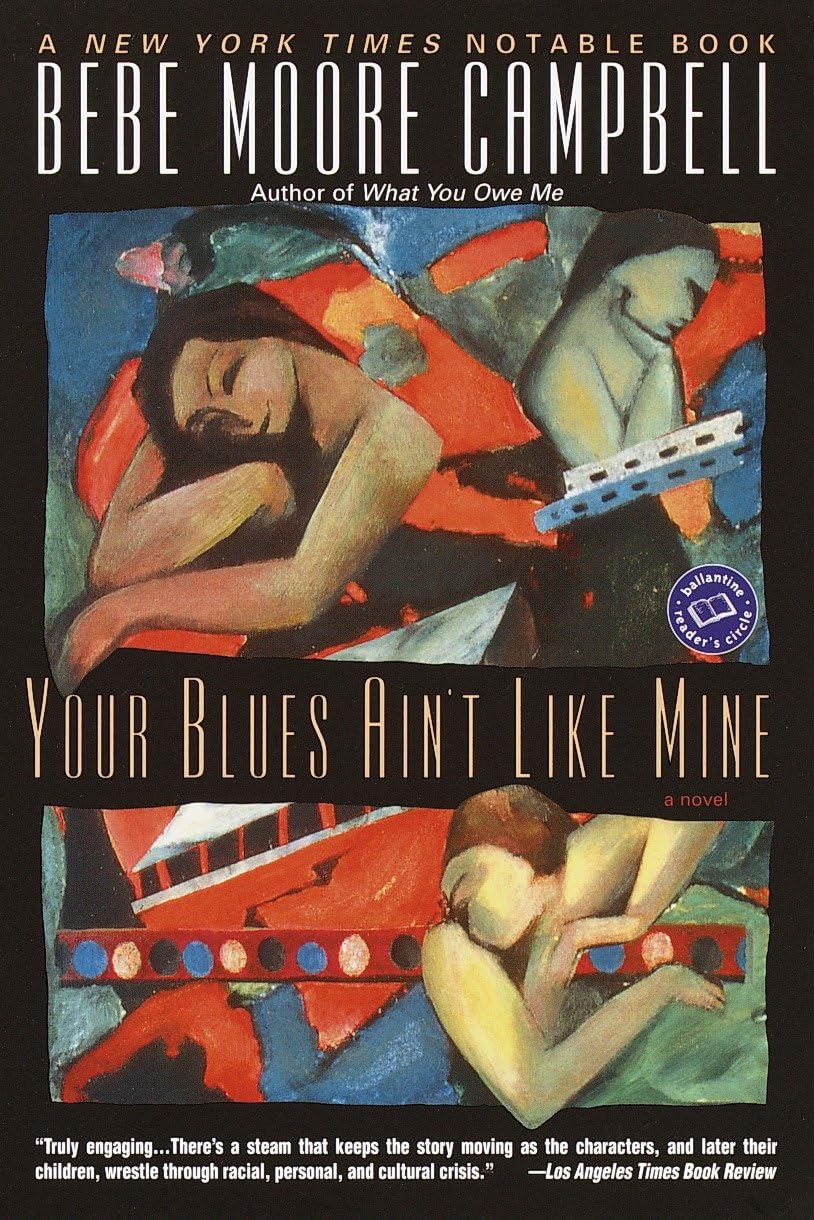



"Intriguing...A thoughtful, intelligent work...The novel traces the yeasr from he '50s to the ate '80s, from Eisenhower to George Bush....She writes with simple eloquence about small-town life in the South, right after the start of the great social upheaval of he civil rights movement....Campbell has a strong creative voice." THE WASHINGTON POST BOOK WORLD Chicago-born Amrstrong Tood is fifteen, black, and unused to the ways of the segregated Deep South, when his mother sends him to spend the summer with relatives in rural Mississippi. For speaking a few innocuous words in French to a white woman, Armstrong is killed. And the precariously balanced world and its determined people--white and black--are changed, then and forever, by the horror of poverty, the legacy of justice, and the singular gift of love's power to heal. I was talking to a well read New York radio personality the other day, and she mentioned that this book is one of the classics of African American literature. I know that for many Bebe Moore Campbell fans, this is their favorite of her works. Whenever I hear of someone wanting to read a novel that's just loads of fun but also a real work of literary merit, I recommend YOUR BLUES. That readio personality was absolutely correct. "Intriguing...A thoughtful, intelligent work...The novel traces the yeasr from he '50s to the ate '80s, from Eisenhower to George Bush....She writes with simple eloquence about small-town life in the South, right after the start of the great social upheaval of he civil rights movement....Campbell has a strong creative voice." THE WASHINGTON POST BOOK WORLD Chicago-born Amrstrong Tood is fifteen, black, and unused to the ways of the segregated Deep South, when his mother sends him to spend the summer with relatives in rural Mississippi. For speaking a few innocuous words in French to a white woman, Armstrong is killed. And the precariously balanced world and its determined people--white and black--are changed, then and forever, by the horror of poverty, the legacy of justice, and the singular gift of love's power to heal. "Intriguing...A thoughtful, intelligent work...The novel traces the yeasr from he '50s to the ate '80s, from Eisenhower to George Bush....She writes with simple eloquence about small-town life in the South, right after the start of the great social upheaval of he civil rights movement....Campbell has a strong creative voice." THE WASHINGTON POST BOOK WORLD Chicago-born Amrstrong Tood is fifteen, black, and unused to the ways of the segregated Deep South, when his mother sends him to spend the summer with relatives in rural Mississippi. For speaking a few innocuous words in French to a white woman, Armstrong is killed. And the precariously balanced world and its determined people--white and black--are changed, then and forever, by the horror of poverty, the legacy of justice, and the singular gift of love's power to heal. Bebe Moore Campbell was the author of several New York Times bestsellers: Brothers and Sisters; Singing in the Comeback Choir; What You Owe Me , which was also a Los Angeles Times Best Book of 2001; and 72 Hour Hold . Her other works include the novel Your Blues Ain’t Like Mine , which was a New York Times Notable Book of the Year and the winner of the NAACP Image Award for literature. Bebe Moore Campbell died in 2006. The music was as much a gift as sunshine, rain, as any blessing ever prayed for. Lily woke up when the singing began. She lay quiet and still in her bed until her head was full of songs and the strong voices of the fieldworkers from the Pinochet Plantation seemed to be inside her. Part of the song was soft like a hymn; then it would rise to the full force of vibrant gospel and change again to something loud and searing, almost violent. The music was rich, like the alluvial soil that nourished everything and everyone in the Delta. Lily began to feel strong and hopeful, as if she was being healed. Colored people's singing always made her feel so good. Much too quickly, the song was over, without even leaving an echo to keep her company. Years later, she would fight to hum even a scrap of the notes that floated to her from the Pinochet Plantation that day, but by then the song had seeped into the land like spilled blood, and its vanishing echo was just another shadow on her soul. As Lily lay in bed looking out the window into the wee hours of that Mississippi morning, it seemed as if someone had drawn down a heavy black curtain on the world. She felt lonely and adrift in the sudden quiet. Daylight was at least an hour away, and she couldn't fall back asleep. She groped in the dark toward the still body of her husband, who was lying next to her. With movements as quick and furtive as a thief's, Lily pressed her breasts into Floyd's bare back; she wanted him to wake up feeling the tips of her nipples against his skin, the slight undulating movement of her groin rotating against his behind. It was like the