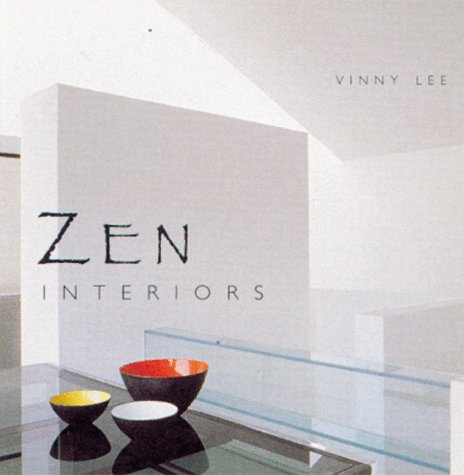



Shows examples of interiors that feature the balance, harmony, and simplicity found in the principles of Zen Buddhism, and shows how lighting, fabrics, and color to affect the senses Two major tenets of Zen--simplicity and serenity--lend themselves perfectly to today's quest for tranquility and balance in the home. Espousing restrained, uncluttered rooms documented here in soothing, neutral-toned interiors, Vinny Lee's Zen Interiors outlines the philosophy and the practicalities of streamlining your home and your life to achieve such an environment. The results are a soft modernist look, a pared-down contemporary styling of minimal architectural detailing, limited color palette, and absolutely no clutter. But, as Lee cautions, you don't want to add to the burdens of an already busy lifestyle, so you must find the degree of minimalism that suits you. In other words, if you're merely daydreaming of less cluttered surroundings yet know in your heart that you can't live in a sparse environment--no matter how elegant--then the Zen interior is probably not for you. But if you're truly seeking to streamline your life in search of that harmonious balance, you'll find plenty of good advice here. --Amy Handy Vinny Lee is a writer and stylist specializing in interior design. Her work has appeared in Homes & Gardens and House & Garden magazines, as well as The Independent and The Guardian. She has written several books including Kitchens: A Design Source Book for Stewart, Tabori & Chang. From The Introduction- In these hectic, machine-driven, stressful days of modern living, people are increasingly looking for ways to create havens of calm and relaxation within their own homes. They are searching for an oasis where they can unwind, regain some contact with the natural world, and enjoy a few precious moments of serenity. This quest for peace and tranquility has led designers and decorators to look to the East to the natural harmony and balance of Asian homes and to the simplicity of their art and design. In this book, "Zen Interiors," we trace the contemporary influence of the East on the Western home, showing how the calm, natural harmony, and balance that is seen in Asia can be used to create living spaces that provide a tranquil respite from our increasingly frantic lifestyles. The two main keys to Zen style interiors are simplicity and serenity. These imply the paring down of a cluttered environment and concentration on creating harmony, balance, touch and texture. By achieving these things you can create a place where the spiritual or inner needs can be addressed and where you can indulge in calming or stimulating the senses with light, space, and a free flow of energy. Among, the beliefs of Zen is the conviction that you can find pleasure in even the most simple of everyday tasks-in bathing, meditation, an preparation of food-so the rooms or spaces where these activities take place are important. Eating Places, Living Rooms, Sleeping Spaces, and Water Rooms are each individual areas that should be arranged and decorated to crate tranquil and calming atmospheres... ...In this book we look at Zen style interiors, how the pure Zen approach can be adapted and tailored to suit not only the Western climate and way of life but also to our buildings and settings, whether they be a red brick Victorian terraced house, a barn in the country, or an inner city apartment. Used Book in Good Condition