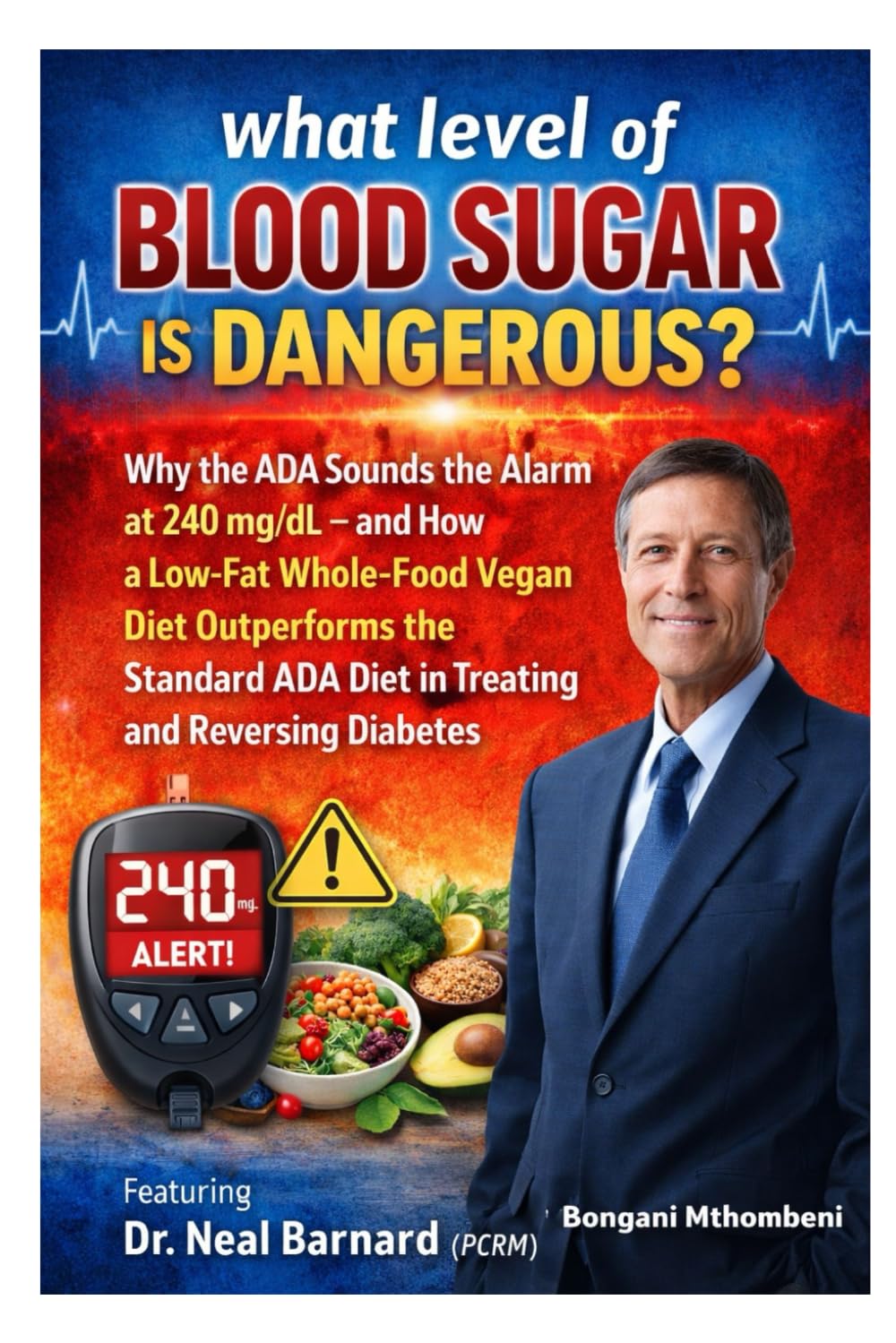
what level of blood sugar is dangerous?: Why the ADA Sounds the Alarm at 240 mg/dL — and How a Low-Fat Whole-Food Vegan Diet Outperforms the Standard
$9.99
by Bongani Mthombeni



📘 what level of blood sugar is dangerous? Why the ADA Sounds the Alarm at 240 mg/dL — and How a Low-Fat Whole-Food Vegan Diet Outperforms the Standard ADA Diet in Treating and Reversing Diabetes By Bongani Mthombeni ⚠️ When does blood sugar cross the line from “high” to life-threatening? The American Diabetes Association (ADA) warns that 240 mg/dL is a critical danger point—one associated with dehydration, ketone buildup, diabetic emergencies, and long-term organ damage. Yet millions of people reach or exceed this level every day—often while following standard dietary advice. This book asks the uncomfortable but essential question: What level of blood sugar is dangerous—and why are so many people still reaching it? 🔬 What You’ll Discover Inside ✔️ The exact blood sugar levels considered dangerous, very dangerous, and life-threatening ✔️ Why the ADA recommends urgent medical attention at 240 mg/dL ✔️ What Wikipedia and medical consensus say about hyperglycemia, ketoacidosis, and long-term damage ✔️ Why medications alone often lead to dangerous highs and lows ✔️ The hidden flaw in the standard ADA diet 🌱 The Vegan Difference — Backed by Clinical Trials This book reveals why a low-fat whole-food vegan diet consistently outperforms conventional approaches: Dr. Neal Barnard (PCRM) randomized 99 people with type 2 diabetes to either: A low-fat vegan diet, or The ADA-recommended diet 📊 Results after 22 weeks: 43% of the vegan group reduced diabetes medications Only 26% of the ADA group could do the same Greater improvements in: HbA1c Body weight LDL cholesterol The vegan diet didn’t just lower numbers—it addressed insulin resistance at the root. 🎥 Featured Insights from What the Health The documentary What the Health highlighted a powerful truth: Whole-food plant-based diets were more than twice as effective at improving diabetic outcomes compared to standard dietary advice. Not by cutting carbs—but by removing fat that blocks insulin from working. 🩺 Why This Book Matters High blood sugar doesn’t become dangerous overnight. Damage begins long before symptoms appear. This book explains: Why 240 mg/dL is a warning, not a target How food—not just medication—determines glucose stability Why preventing spikes is safer than treating emergencies How many people avoid dangerous levels entirely by changing what’s on their plate 📌 Who This Book Is For ✔️ People with Type 2 diabetes or prediabetes ✔️ Those concerned about dangerous glucose spikes ✔️ Readers interested in diet-based diabetes reversal ✔️ Anyone questioning standard ADA nutrition advice ✔️ Vegans and plant-based beginners seeking science-based guidance 🌿 The Bottom Line The ADA sounds the alarm at 240 mg/dL. A low-fat whole-food vegan diet helps ensure the alarm never goes off. 📖 Scroll up and buy now to understand the danger zones—and how to stay out of them naturally.