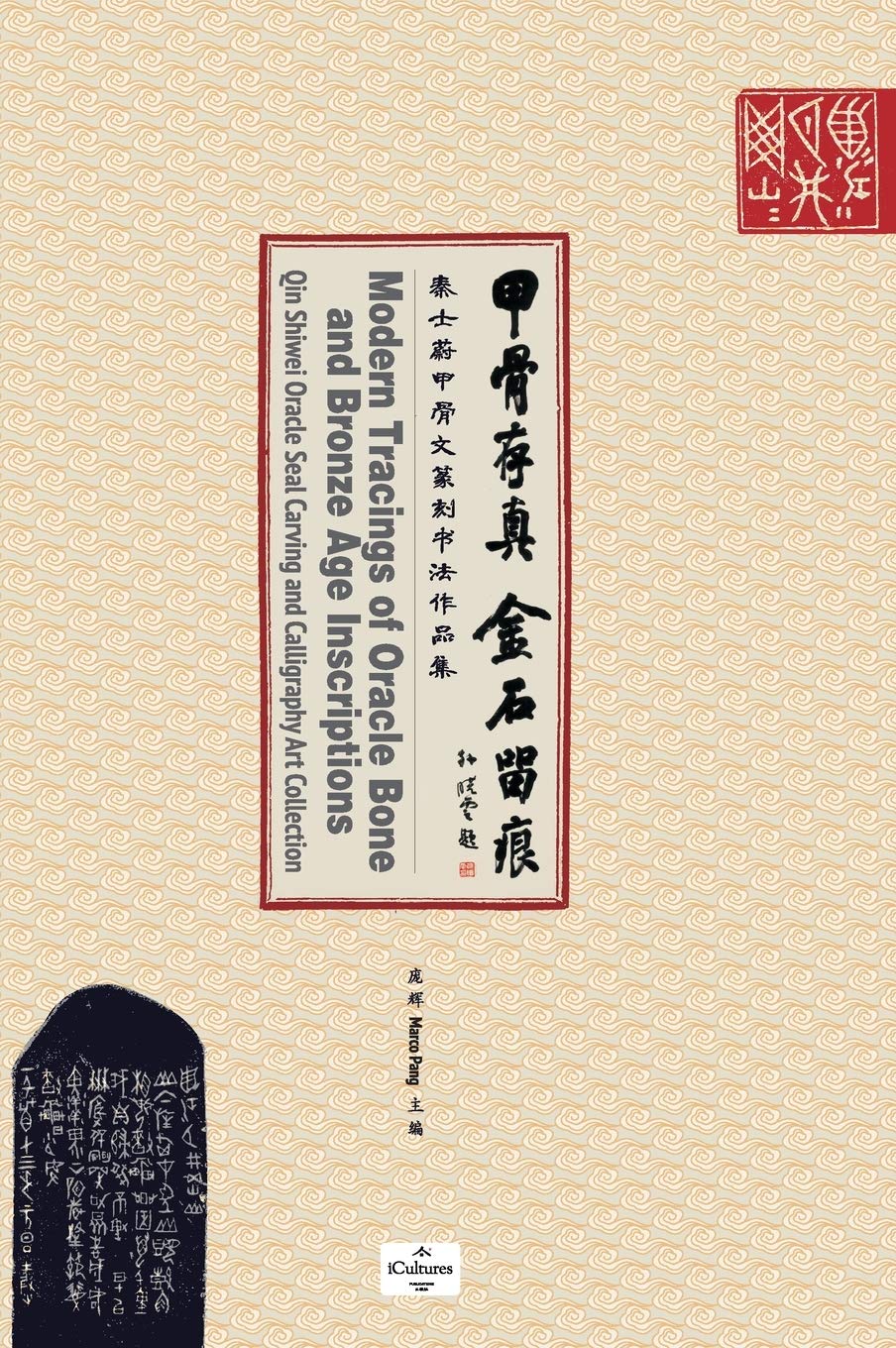



Oracle bone script was China's first fully developed Chinese character system. In November 2017, the United Nations Educational, Scientific, and Cultural Organization selected the Oracle bone script to enter the Memory of the World Programme. Examples of oracle bone scripts are scarce in the contemporary art world. This book showcases never-before-seen oracle bone inscriptions by the famous Chinese artist and calligrapher Qin Shiwei. We hope to preserve Chinese culture and promote cultural exchange between the East and the West by publishing these works. The engravings and paintings found in this book represent a wealth of new material for scholars and research institutions. Modern Chinese writing can map its history directly back to oracle bone inscriptions. Mr. Qin's outstanding artistic achievements will undoubtedly preserve the legacy of oracle bones for the next generation. 本书选择了先生生前的部分工作和创作照片。编印作品内容共三部分:其一是甲骨文篆刻作品,其朱文、白文、跋中,只要出现甲骨文字入印即归类第一部分;其二是甲骨文书法作品,要求一律为甲骨文字;其三是非甲骨文字的篆刻和书法代表性作品。以飨读者。 I was surprised by how well the book helped express the breadth and beauty of Qin Shiwei's art. At first glance, it would appear as a random collection of his work, but as I realized how hard it is to reproduce these carvings, the spatial technique involved, inverse text versus raised script effects, yet capturing that inner beauty of primitive expression, I began to appreciate the thought and effort it took Hui Pang to arrange, freshen up and preserve Qin's works of art in this book. It gives me a feeling of connection with ancient humans involved in bone script rituals, facing troubles in a primitive world and looking for answers in foretelling and seers, no different from people today consulting "experts" to find solutions for their destinies. Reviewed in the United States on July 13, 2020. Andie Liu I have always appreciated ancient Chinese culture. This book highlights Mr. Qin's lifelong research on Oracle bone inscriptions and records the author's longstanding friendship with Mr. Qin, which is remarkable and admiring. The author is unreserved in sharing his knowledge and spirit with this book for readers who love ancient art and culture. Reviewed in the United States on July 30, 2020, Bo In this era of fast food culture, reading a book a day is widespread and even worth showing off. However, this is a book worthy of long-term appreciation. For those who aren't proficient in oracle script or seal cutting, this collection is a good read for liking. For those who are scholars and experts, this collection is an excellent reference for further study of Chinese primitive calligraphy. This book not only shows how Qin ShiWei reincarnated the oracle script and brought attention to its beauty but also presents how the selection of Qin ShiWei's work reflects him as a person throughout 20th century China. Pang's ability to achieve both effortlessly and deliver them vividly to the reader is something that I admire and respect. Reviewed in the United States on July 15, 2020, fu xiao Hui Pang was born in Changzhou, Jiangsu, China, in 1954. He has been collecting and researching Chinese Art for 35 years, containing paintings and calligraphy, Buddha Statues, porcelain, furniture, bamboo carvings, wood carvings, and stone carvings. His studies focus on the Chinese Jinling Painting School and Jinling culture in the ancient capital of the Six Dynasties of China. He is a consultant for the China Jiangsu International Cultural Exchange Center and North American Chinese Collectors Association Vice President.